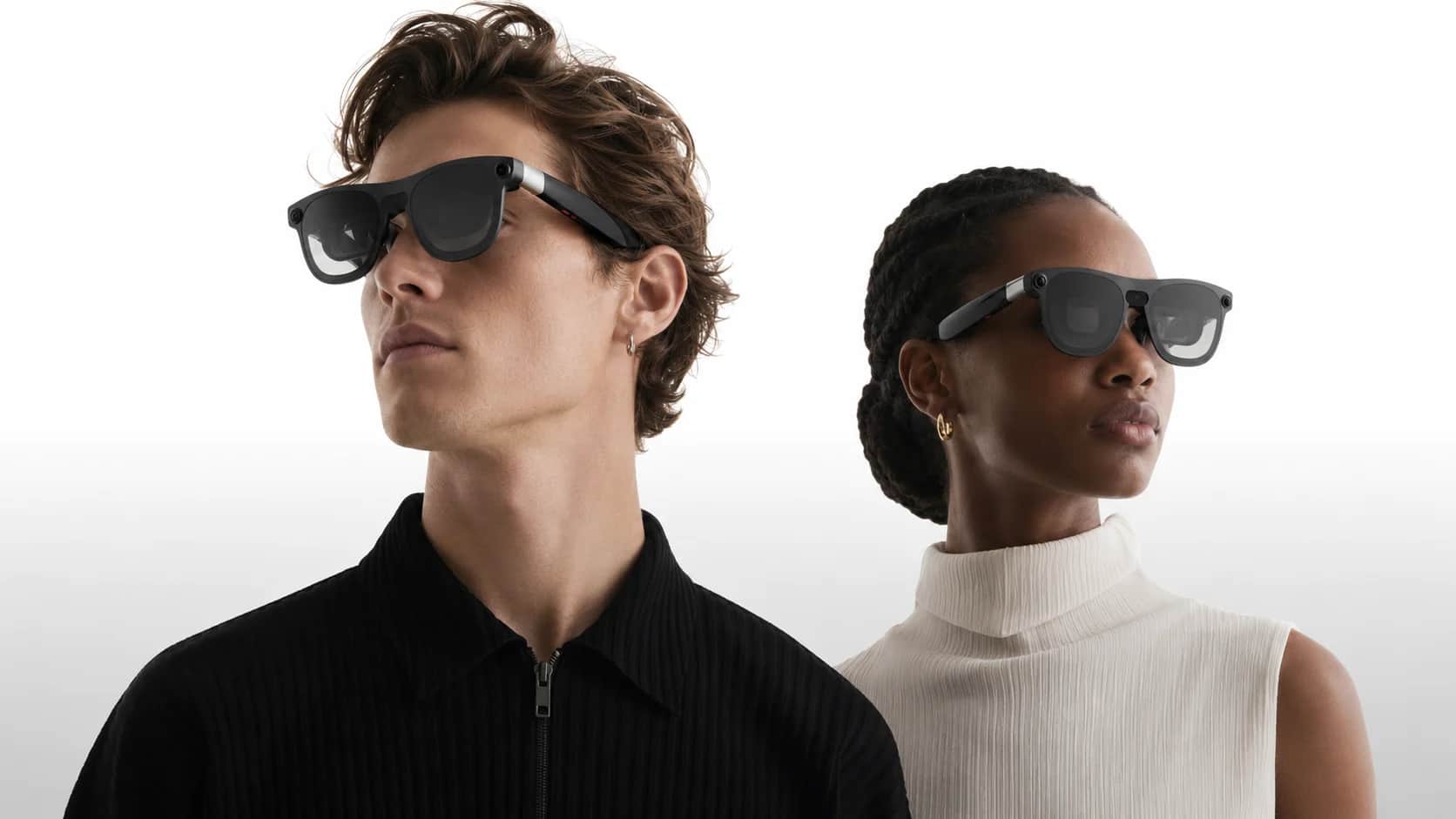
XREAL Aura attempts to solve a problem that has accompanied extended reality for decades: How to put space applications in front of the eyes without forcing the person to wear a large, closed headset? XREAL's answer is not to squeeze everything into the frame. The product divides the work between clear glasses and a processing module that sits in the pocket.
The result is closer to a portable space computer than a simple monitor attached to the face. It runs Android XR, integrates Gemini, tracks hands and head movements and projects applications on the real environment. At the same time, it still depends on a cable, has a high price and is not confirmed for launch in Brazil.
First things first: Aura is no ordinary virtual reality headset
Virtual reality, augmented reality, and mixed reality often appear in the same conversation, but they don't deliver exactly the same experience.
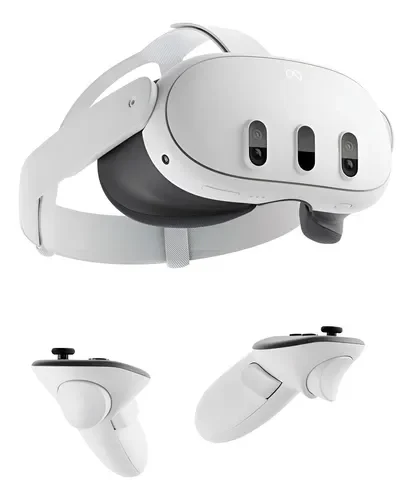
A headset like the Meta Quest 3 It covers vision and uses cameras to show the surrounding environment. This allows you to switch between fully virtual games and mixed reality experiences. XREAL Aura takes the opposite path: its lenses are transparent, so the user continues to see the world directly, without relying on a video stream to see what's ahead.
This choice makes the Aura more discreet and portable, but it also limits immersion. Even when the electronic dimming of the lenses is at maximum level, the peripheral vision of the environment is still present. Therefore, it can run immersive experiences, but it does not intend to immediately replace a headset dedicated to virtual reality gaming.
How we got here
The history of devices worn before the eyes is marked by attempts to balance immersion, weight, processing, and freedom of movement.
- 1967 and 1968: Ivan Sutherland developed one of the first head-mounted visualization systems. Known as Sword of Damocles, was so heavy that it had to be suspended by a structure above the user.
- 1980s and 1990s: Labs, simulation companies, and game makers experimented with virtual reality gloves, visors, and machines. The technology was expensive, limited, and uncomfortable for the general public.
- 2012: the Oculus Rift campaign on Kickstarter reignited interest in consumer virtual reality and showed that there was an audience for a modern headset.
- 2013: Google Glass took the idea of a screen in front of the eyes to a glasses-like format, but offered a small monocular interface, not an immersive spatial environment.
- 2016: Oculus Rift, HTC Vive and PlayStation VR marked the arrival of a new generation of commercial headsets, still dependent on a computer or console.
- 2019: the first Oculus Quest popularized the standalone headset with space tracking, without a computer or external sensors to work.
- 2023: The Meta Quest 3 brought virtual reality and mixed reality closer together by combining closed screens, color cameras passing through and depth sensors.
- 2024: the Apple Vision Pro put the term spatial computing at the center of the market, with eye and hand control, high-resolution screens and a premium-category price.
- 2024: Google, Samsung and Qualcomm announced Android XR, a platform created for headsets and glasses, with Gemini integrated into the system.
- 2025: XREAL introduced Project Aura as its first device to run the full immersive version of Android XR on clear lenses.
- 2026: the project was renamed XREAL Aura. Reservations opened in June, and the launch is still scheduled for the second half of 2026.
The Aura represents another step in this evolution. Instead of choosing between lightweight glasses with few features and heavier full headsets, XREAL tries to create an intermediate category.
What's Inside XREAL Aura
The glasses use Sony's Micro-OLED panels with a resolution of 1,920 by 1,200 pixels in each eye, refresh rate up to 120 Hz and field of view of 70 degrees. Two cameras facing the environment help with tracking, while the system recognizes hands and keeps virtual windows anchored in space with six degrees of freedom, the so-called 6DoF.
The lenses have five levels of electrochromic dimming. You can keep your surroundings visible during an everyday task, or dim it to highlight a movie, a virtual screen, or a more immersive experience. The main camera has a privacy light indicator, and the frame includes four microphones and spatial audio with Bose adjustment.
The heavy processing sits in the cable-connected module. It uses the Snapdragon Reality Elite platform, while the XREAL X1S coprocessor, installed in the glasses, takes care of low-latency spatial tasks. The separation helps take heat and battery out of the head.
The advertised configurations match 12 GB of memory and 256 GB of storage or 16 GB and 512 GB. The module features a 4.455 mAh battery, fingerprint reader, Wi-Fi 6 or 6E, Bluetooth 5.3 and a touch-sensitive surface that works as a controller. It is also possible to use your hands, voice, keyboard, mouse and game controller.
Android XR and Gemini are the most ambitious part
The hardware is eye-catching, but the design relies on both the software and the lenses. Android XR is designed for traditional Android apps to coexist with experiences made specifically for extended reality. XREAL claims that Aura will have access to millions of Google Play apps and more than a hundred XR-ready experiences at launch.
In practice, a person will be able to open Chrome, YouTube, Google Photos and other applications in windows positioned around the environment. Aura also accepts DisplayPort input over USB-C to extend the screen of a notebook, computer or portable console.
Gemini comes in as an integrated assistant. With permission, it can interpret what appears on the screen and the context captured by the sensors to answer questions, open apps, and help with navigation. It's a powerful proposition, but one that requires transparency about when the camera and microphones are active, what data is sent to the cloud, and what controls will be available to the user in the final version.
What the first demonstrations revealed
The reviews published so far are from development units, not the final product. This changes the correct way to interpret praise and criticism.
Ben Lang of Road to VR considered the 70-degree field of view enough to make Android XR useful and praised sharpness, brightness and portability. He also noticed distortion when moving his head, a phenomenon known as pupil swim, and noted that the lenses continue to darken the environment even at the most transparent level. Another limit is the absence of eye tracking, which prevents the gaze and gesture control used in devices like the Galaxy XR.
These points do not condemn the Aura, but remember that the glasses format still demands concessions. The commercial version will need to demonstrate comfort in long sessions, good image stability, real autonomy and a reliable gesture system outside controlled environments.
XREAL Aura or Meta Quest 3?
The Meta Quest 3, released in October 2023, remains a more mature benchmark for gaming and virtual reality. It works wirelessly, comes with Touch Plus controls, has a consolidated library, and offers 2,064 by 2,208 pixels in each eye. Its cameras display the environment in color for mixed reality experiences, but the user looks at internal screens, not directly through the lenses.
The Aura is different. It prioritizes portability, work screens, video consumption, spatial applications, and direct visual coexistence with the environment. Its cable leads to the pocket module, not a computer, and can be an acceptable compromise to reduce the weight on the head. On the other hand, the field of view is smaller, the immersion is less complete and the Android XR ecosystem is still in its infancy.
In summary:
| Choice |
It makes more sense to |
| Meta Quest 3 |
Virtual reality games, exercises, immersive experiences, and a library available today |
| XREAL Aura |
Portable spatial screens, productivity, video, Android apps, and experiences that keep the environment directly visible |
Price, release and availability in Brazil
XREAL informs that the Aura should arrive in the second half of 2026. The reservation is not an advance purchase of the product: the amount serves to guarantee priority and will be applied to the final purchase. According to the company, the base model will cost a maximum $1,500 before tax, but the definitive price and trade configurations are yet to be disclosed.
Until August 23, 2026, Brazil did not appear among the regions confirmed for the initial launch. The list included the United States, Japan, South Korea, and several European countries. This means that imports, warranty, support, taxes, and availability of corrective lenses can weigh heavily on the Brazilian consumer.
Can Aura finally make spatial computing everyday?
The XREAL Aura does not turn ordinary glasses into an invisible computer. The frame is still larger than that of conventional glasses, there is a cable to the pocket module and the price puts it far from the mass market. Even so, the proposal is relevant because it brings together features that previously required a full headset in a format closer to something that people could use to work or watch content outside the home.
Its success will depend on three factors: real comfort, quality of the Android XR ecosystem, and utility beyond demos. If apps work well in spatial windows, tracking is stable, and Gemini offers help without compromising privacy, Aura could point a viable path between simple smart glasses and virtual reality headsets.
For now, it should be seen as a forward promise, not an obvious purchase. The hardware looks set to turn heads. The question that only the launch will answer is whether people will find reasons to put it on their faces every day.
Sources consulted