Hardware
When AI Helps Design the Chips of the Next Generation of AI
AI already optimizes parts of the semiconductor project. Understand the case of Google's TPUs, Synopsys' new agents, and the limits of automation.
By Ederson Andrade · October 6, 2026 · 6 min read
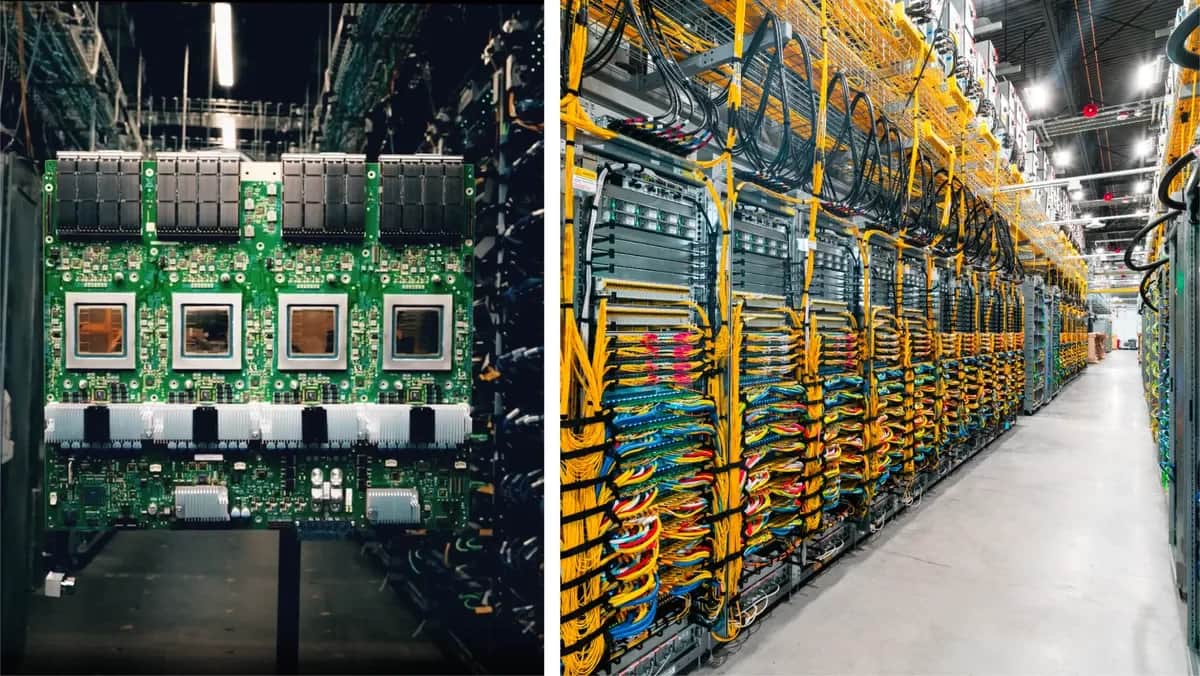
An artificial intelligence chip may have a curious history: part of its design has been optimized by another AI. This already happens at specific stages of semiconductor development. Google, for example, used the system AlphaChip to position components in blocks of your TPUs, processors created to run AI models. Now, electronic design automation companies, such as Synopsys, want to extend the role of AI to entire sequences of tasks.
The interest is in the Cycle between software and hardware: more demanding models point out what the chips need to do; AI tools help engineers find better designs; the resulting chips can run future models. But this cycle doesn't mean that an AI already invents, validates, and manufactures the next generation of processors on its own.
Where does AI come into the design of a chip?
Before a piece of silicon exists, a team defines the function of the chip, describes its circuitry, organizes millions of components, verifies that everything works, and prepares the design for manufacturing. These steps use tools from EDA (electronic design automation, or automation of electronic projects) for decades. The novelty is to employ AI methods to explore alternatives and coordinate some of this work.
There are two applications that deserve to be separated:
| Application | What AI does | What it doesn't mean |
|---|---|---|
| Layout optimization | Tests ways to position blocks and adjust the design for power, performance, and area targets. | Create the entire chip architecture without requirements or engineers. |
| Design and verification agents | They plan tasks, activate tools, analyze results, and repeat steps when they find failures. | Dispense with testing, technical approval, or the tools that verify the design. |
In the first case, the system looks for a good solution in a huge space of possibilities. In the second, it tries to conduct a workflow: run a check, identify an error, propose a fix, and test again. Generating a plausible response is not enough; The circuit needs to comply with physical restrictions and work when it leaves the factory.
The example that has already reached silicon: AlphaChip and TPUs
Google DeepMind's AlphaChip uses reinforcement learning: It experiments with component placements and is given a measure of quality to improve its choices. Its focus is on floorplanning, the organization of large blocks within an area of the chip. According to the Team that developed the method, the generated layouts were used in generations of TPUs, Google's accelerators that run AI systems.
The case makes the cycle concrete. Google claims that the AlphaChip also helped with the layout of the Ironwood TPU, aimed at AI payloads. The contribution is for parts of the physical positioning, not proof that AlphaChip single-handedly conceived Ironwood. Architecture, integration, verification, and manufacturing continue to involve disparate teams and processes.
This detail avoids a common confusion: "designed with AI" does not describe how much of the chip has been automated. It can mean anything from a more efficient search for an arrangement of components to assistance in generating and testing circuits.
What has Synopsys announced now?
In September 28, 2026, Synopsys presented o AgentEngineer, a set of agents for design and analysis tasks, supported by the platform Autopilot. The proposal goes beyond an assistant that suggests commands: an agent can be assigned an objective, organize subtasks, call EDA tools, review the results, and change the plan when necessary.
A Company Technical Description gives an example in verification. An agent interprets a specification, prepares tests, runs tools, measures how much of the behavior has been covered, investigates failures, and repeats the process. Another agent works on the physical implementation, which includes positioning, connections between components, and time and consumption checks. Synopsys says teams can establish points where people inspect the results and decide whether to proceed.
The company says it has Over 50 customer engagements and provides for general availability of the platform for the End of 2026. This indicates evaluations and early adoption; it is not to say that 50 chips have been created autonomously or manufactured. Synopsys also reports productivity and verification gains in select cases. How Tom's Hardware noted when examining the announcement, these numbers do not represent a guaranteed outcome for every project.
Synopsys' use of AI didn't start with these agents. Its DSO.ai, launched in 2020, employs reinforcement learning to explore design combinations and optimize Power, performance and area, three objectives that often require trade-offs with each other. AgentEngineer attempts to coordinate more steps; DSO.ai is an earlier example of AI applied to a bounded problem.
Why does human decision still matter?
A design can pass one test and fail another: gain speed but consume too much power; fit into the intended area but create connections that are difficult to manufacture; fix one flaw and introduce another. There are also architecture, cost, intellectual property, and risk decisions that depend on the product and the company. Therefore, step automation does not equate to unrestricted autonomy.
The decisive point is the independent verification of what the agent produced. Simulations and analysis tools need to confront their suggestions with the rules of the project; engineers need to set goals and approve critical decisions. Even Synopsys describes EDA tools as the layer that performs and validates specific tasks, while teams can maintain human review points.
To keep up with this technology, it's worth asking three questions whenever a new ad comes up: Which step was automated, which chip or project used the tool, and how was the result verified? The case of TPUs shows that AI already contributes to real hardware. Synopsys' new agents show the direction the industry intends. The distance between these facts and an entirely AI-created chip remains an essential part of the story.
Sources consulted
- Google DeepMind: How the AlphaChip is used in TPU layouts
- Google: Ironwood and the use of AlphaChip
- Synopsys: Announcing AgentEngineer and Autopilot Platform
- Synopsys: operation of agents and review points
- Synopsys: DSO.ai and optimization of the project space
- Tom's Hardware: Synopsys Announcement Review
- Tom's Hardware: October 3, 2026 roundup that motivated the agenda