Threehalves: robot to save lives or beginning of the apocalypse?
With four legs, horns and a chainsaw on his arm, Threehalves looks like a villain. We investigate what is real in the Satyress prototype and what is still just a promise.
By Ederson Andrade · September 14, 2026 · 12 min read
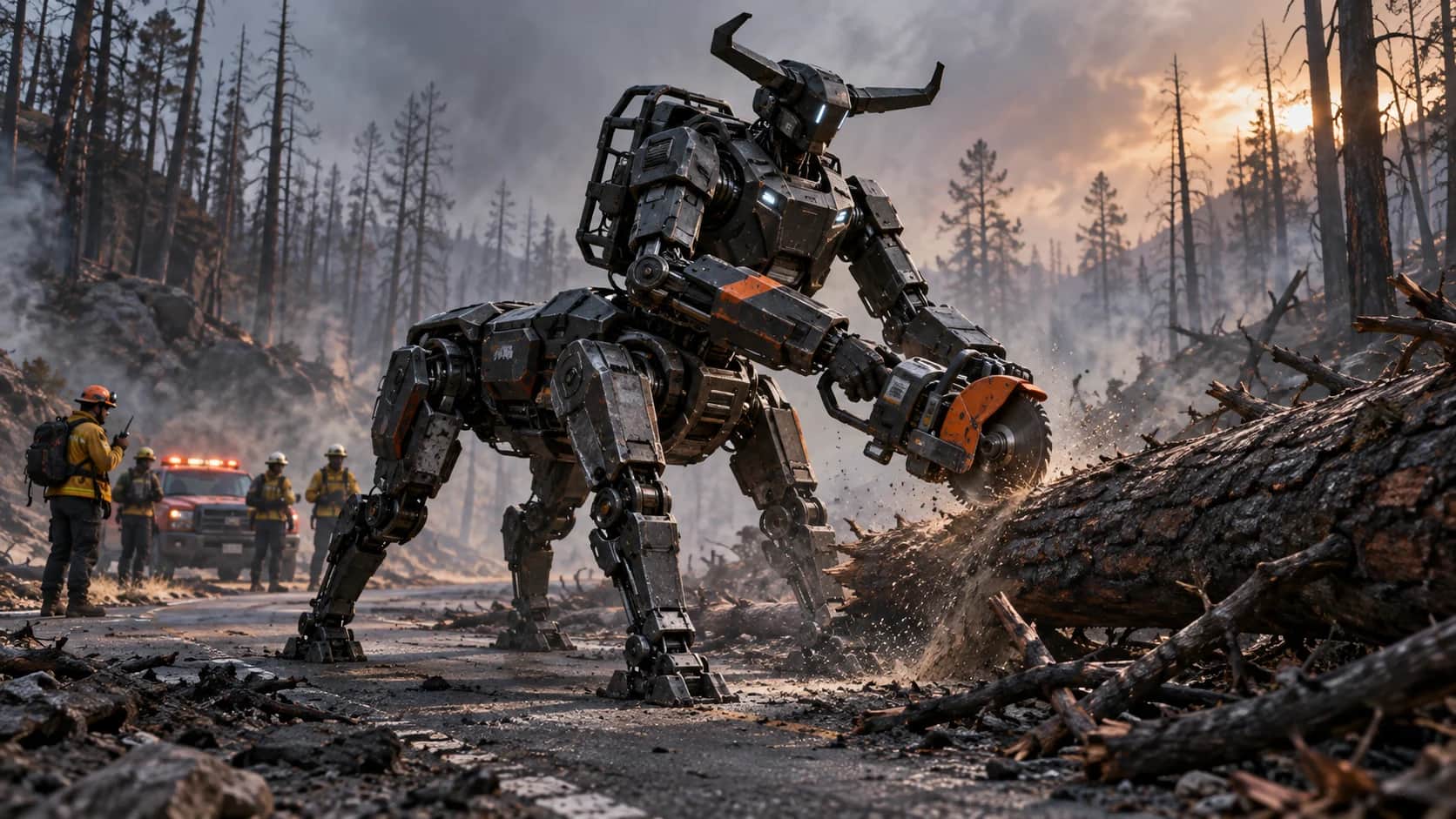
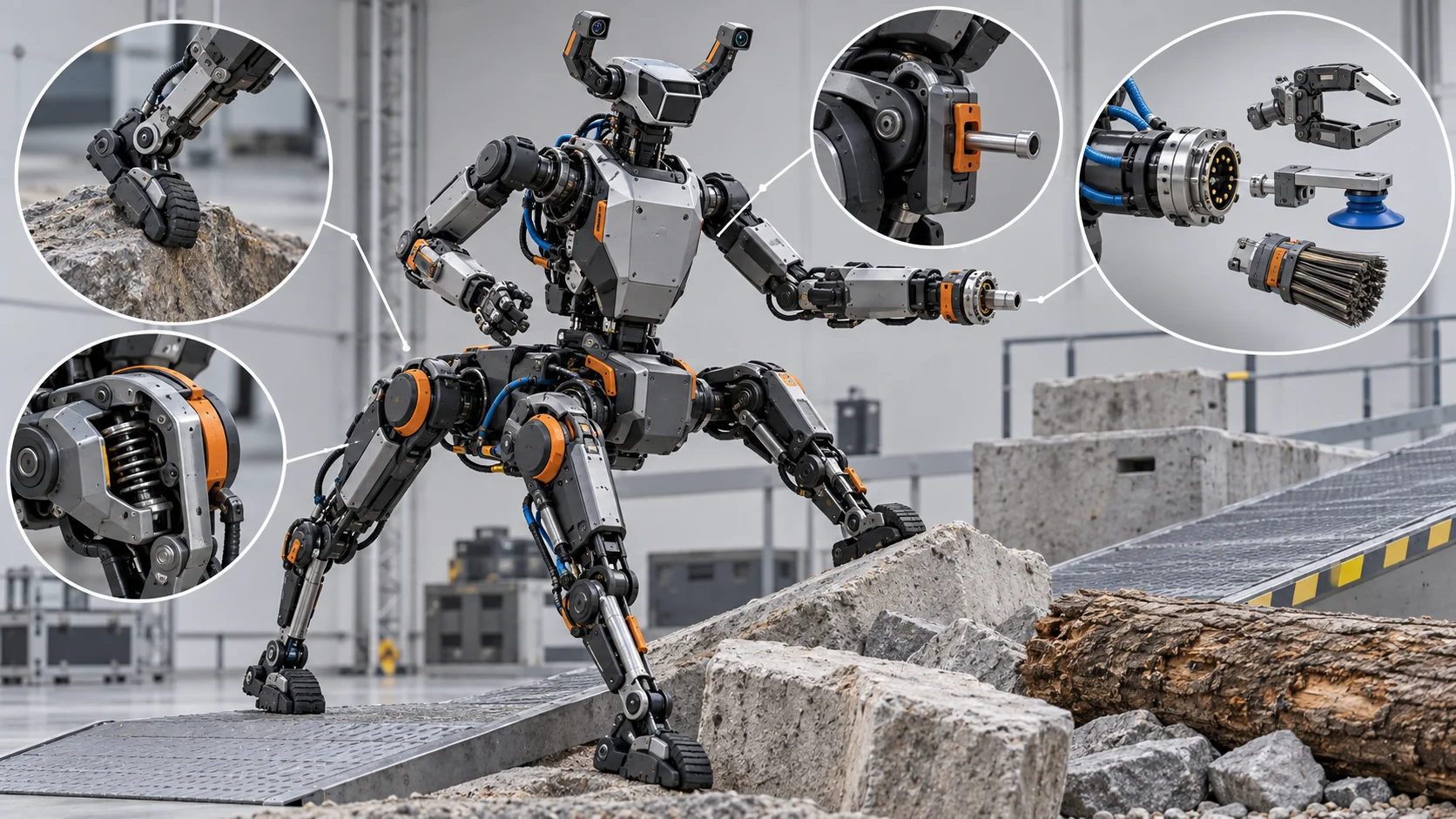
Concept illustration generated with artificial intelligence for TecEdi. The scene represents the proposal of a centaur rescue robot and does not document the current operation of Threehalves.
Threehalves: savior robot or beginning of the apocalypse? | TecEdi
A gold sensor reads amino acids molecule by molecule. Understand the search for biosignatures, the role of AI, and why the method still doesn't prove life beyond Earth.
The idea started in fiction, became a scientific search for infrared heat and reached James Webb. Understand how a Dyson swarm would work and what happened to the 2024 candidates.
By Ederson Andrade · 14 min read
Imagine being lost in a smoke-covered forest and hearing a chainsaw approaching. Among the trees appears a six-foot-tall black machine, with four legs, a humanoid torso, a horned head, and tools for hands. Did it come to rescue you or herald the beginning of the apocalypse?
The question is a joke, but it perfectly sums up the reaction provoked by the Threehalves, a project by the small Satyress Robotics, from Auburn, California. The images of the machine seem to show a video game boss who chose to work as a forest firefighter. The declared proposal, however, is serious: to place a robot between qualified professionals and environments capable of injuring or killing them.
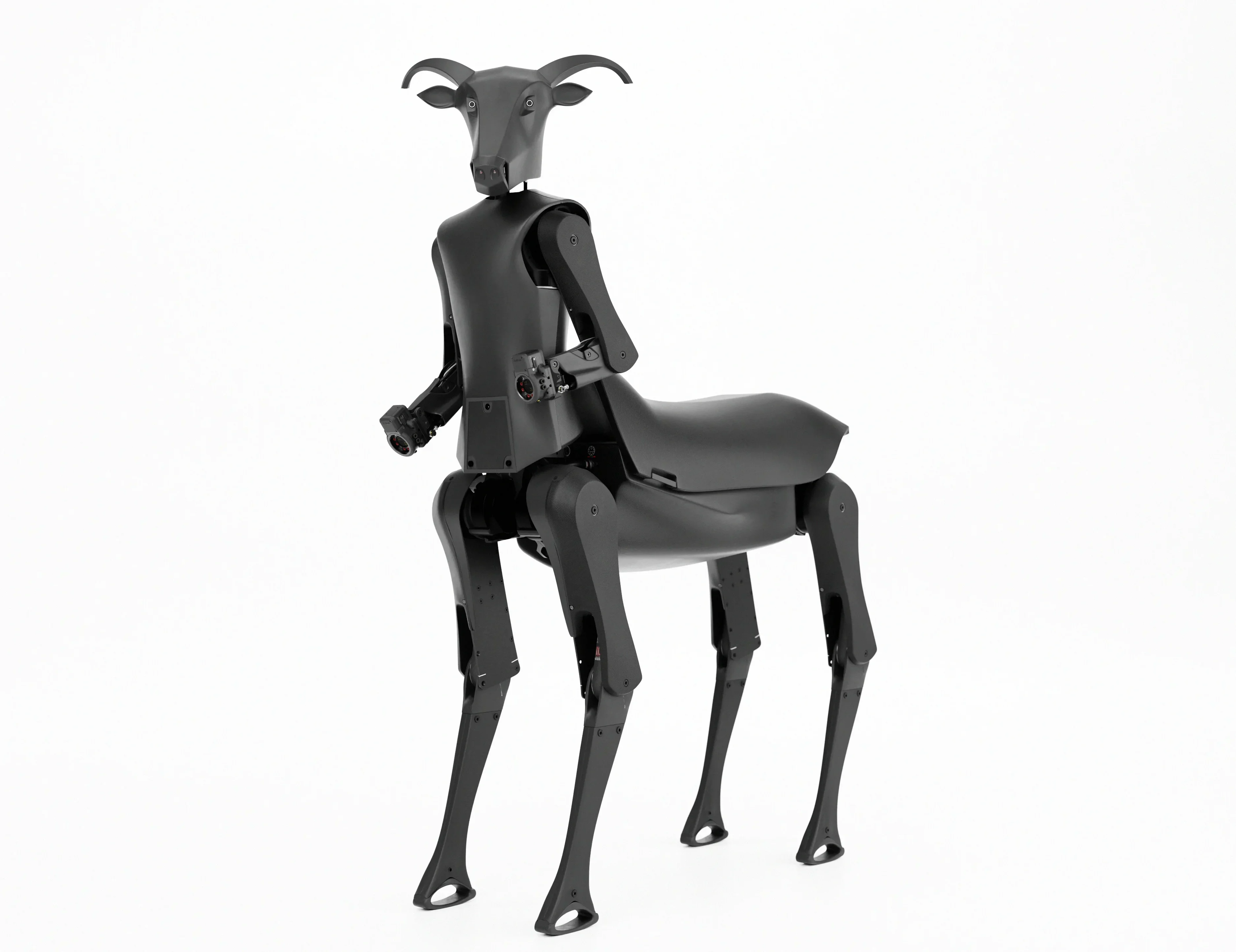
Official disclosure image published by Satyress on its website. The record shows the design presented by the company, but does not prove the announced operational capabilities. Credit: Satyress Robotics/disclosure.
Before choosing between savior and villain, there is an essential distinction. As of September 2026, Threehalves has yet to be demonstrated as a complete system walking, manipulating tools, or working on a fire. There are renderings, static photographs, and component testing. The company itself acknowledges that it is still far from showing elegant movements.
So this isn't the story of a robot ready to go into service. It's the analysis of an unusual engineering idea, a prototype under construction, and the enormous distance that still separates a viral image from a reliable machine.
What is Threehalves
Satyress describes Threehalves as a general-purpose robot for hazardous work. The design combines a quadruped base with a human-like torso. According to information provided by the company to The Debrief, the current structure would be just under 2.13 meters tall and about 109 kilograms.
The centaur body tries to combine two advantages:
four legs form a more stable base on uneven ground;
The humanoid torso allows you to position arms and tools in places designed for workers.
It does not have robotic hands. Each arm ends in a quick fitting that, in the design, can receive a chainsaw, drill, impact wrench or other tool. The electrical energy at different voltages and the compressed air would be supplied by the robot itself to the accessory.
The machine was also designed to be modular. Head, torso and limbs could be replaced and recalibrated after a breakdown. Satyress also claims that two crouching units would fit side by side in the bed of a pickup truck approximately 1.7 meters long.
All of this describes an intended architecture, not performance already validated in the field.
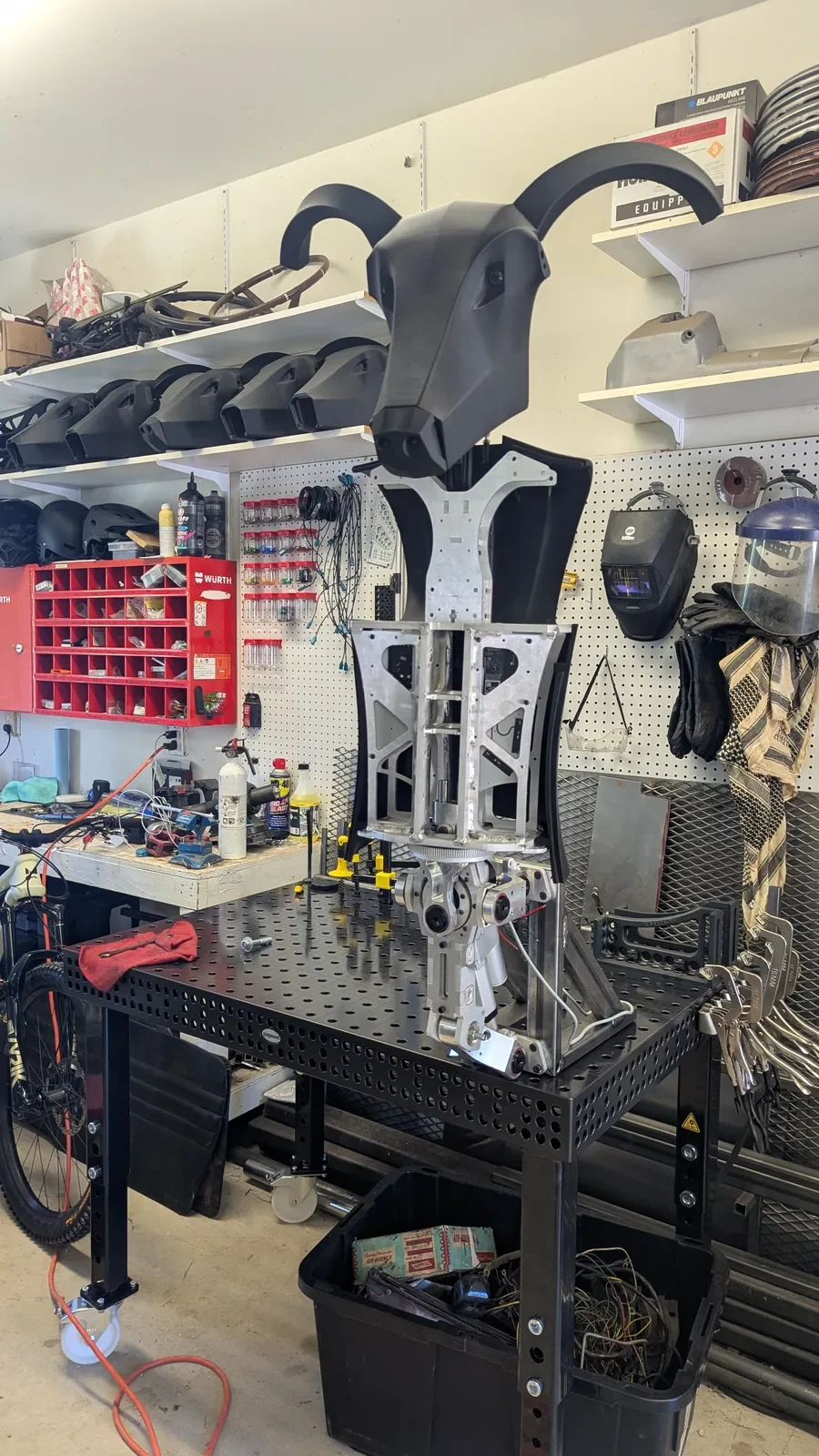
Development photograph published by Satyress on its official website. The incomplete structure helps separate the physical prototype from the promotional images of the finished robot. Credit: Satyress Robotics/disclosure.
The most important detail: it still doesn't work as shown in the images
The compelling visuals help hide the main limitation of the story. In an interview published on July 31, 2026, Satyress told The Debrief that it was conducting tests at the component level. The complete vehicle had not yet been presented in motion, and there was no public demonstration of it walking or operating tools.
The report also confirmed that some of the most impressive scenes are renderings or still images used to show the intent of the project. A commercial version would be more than two years away, with no date, price or final specifications announced.
Days later, founder Beau G. appeared in a report by the broadcaster KCRA 3. He showed parts in development and explained the origin of the proposal, but the presentation continued without a full proof of the announced capabilities.
This difference changes the correct way to talk about the subject. It is not possible to say that Threehalves goes through rubble, knocks down trees, resists the heat of a fire or saves people. What can be said is that the team intends to build a machine for these tasks and has already shown physical parts of the development.
Why a centaur can make sense in engineering
Despite its extravagant appearance, adding four supports to a torso with arms is not an unprecedented idea. Between 2015 and 2018, a European consortium developed the CENTAUR, a disaster response robot funded by the European Union and coordinated by the University of Bonn.
The CENTAUR used four wheeled legs and an anthropomorphic torso. In evaluations, it climbed stairs, traversed uneven terrain, manipulated valves, and used tools. The design employed telepresence, sensors, and different levels of autonomous assistance. It does not prove that the Threehalves will work, but it does demonstrate that the centaur shape has real technical underpinnings.
A quadruped base enlarges the supporting polygon. In simple terms, the machine can distribute weight between several points and seek a stable posture before applying force with the arms. This is especially useful when pushing, drilling, cutting, or lifting something.
A bipedal humanoid has the advantage of fitting into spaces made for people, but it needs to balance its body continuously. If power or control fails, it can fall. A four-legged machine tends to accept wider postures and can remain supported with less effort, although it gains weight, volume, and mechanical complexity.
Conceptual technical illustration created for TecEdi. The details explain general principles and do not represent the official internal design of Threehalves.
It's not artificial intelligence loose in the forest
The point that weakens the apocalypse joke the most is also one of the most interesting in the project: Satyress does not intend to hand over decisions to an artificial intelligence.
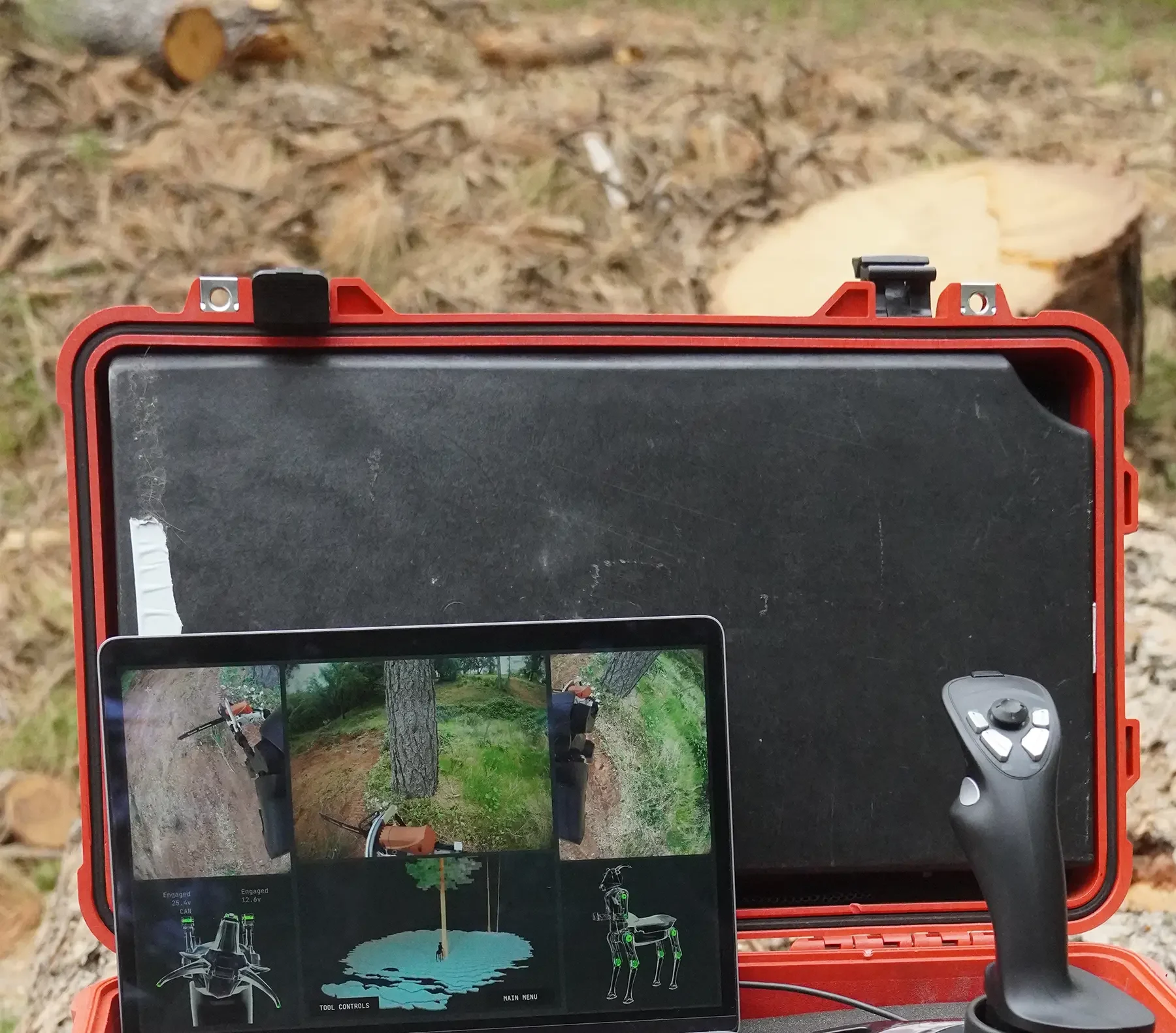
Threehalves is designed for Teleoperation. A professional would use a computer, cameras, and joystick-like controls to command the machine from a safe distance, initially maintaining eye contact with the work area. Local balance functions could translate the "go there" command into leg movements, but the choice of task would remain with one person.
This approach preserves the experience of those who know trees, structures, tools and emergency procedures. Instead of trying to replace the worker, the company says it wants to give him a mechanical body capable of receiving heat, impact, smoke or contamination.
Teleoperating doesn't solve everything. Communication delay, signal loss, limited visibility, operator fatigue, and too much information on screens can all produce errors. NIST, the U.S. Institute for Standards and Technology, treats operator proficiency, communication, mobility, dexterity, sensors, autonomy, durability, and safety as capabilities that need to be measured in emergency response robots.
Official image of the teleoperation station published by Satyress. The material shows the interface proposed by the company, not an independent validation of the complete system. Credit: Satyress Robotics/disclosure.
The problem he wants to face is very real
The mood around appearance should not hide the risk of forestry work. 2024 data from the United States Bureau of Labor Statistics recorded 110.4 deaths for every 100,000 full-time equivalent workers among logging professionals. There were 51 deaths that year, the highest rate among the occupations selected by the agency.
Chainsaws, trees under tension, heavy logs, slopes, distance from hospitals, and unpredictable conditions all combine. Fires add heat, smoke, low visibility, and rapid changes in wind. Collapsed structures and contaminated industrial areas create other hazards.
Robots are already used to observe environments, search for victims, inspect facilities and deal with dangerous objects. The difficulty lies in turning an experimental machine into equipment that firefighters or rescue workers can transport, maintain, operate and rely on under pressure.
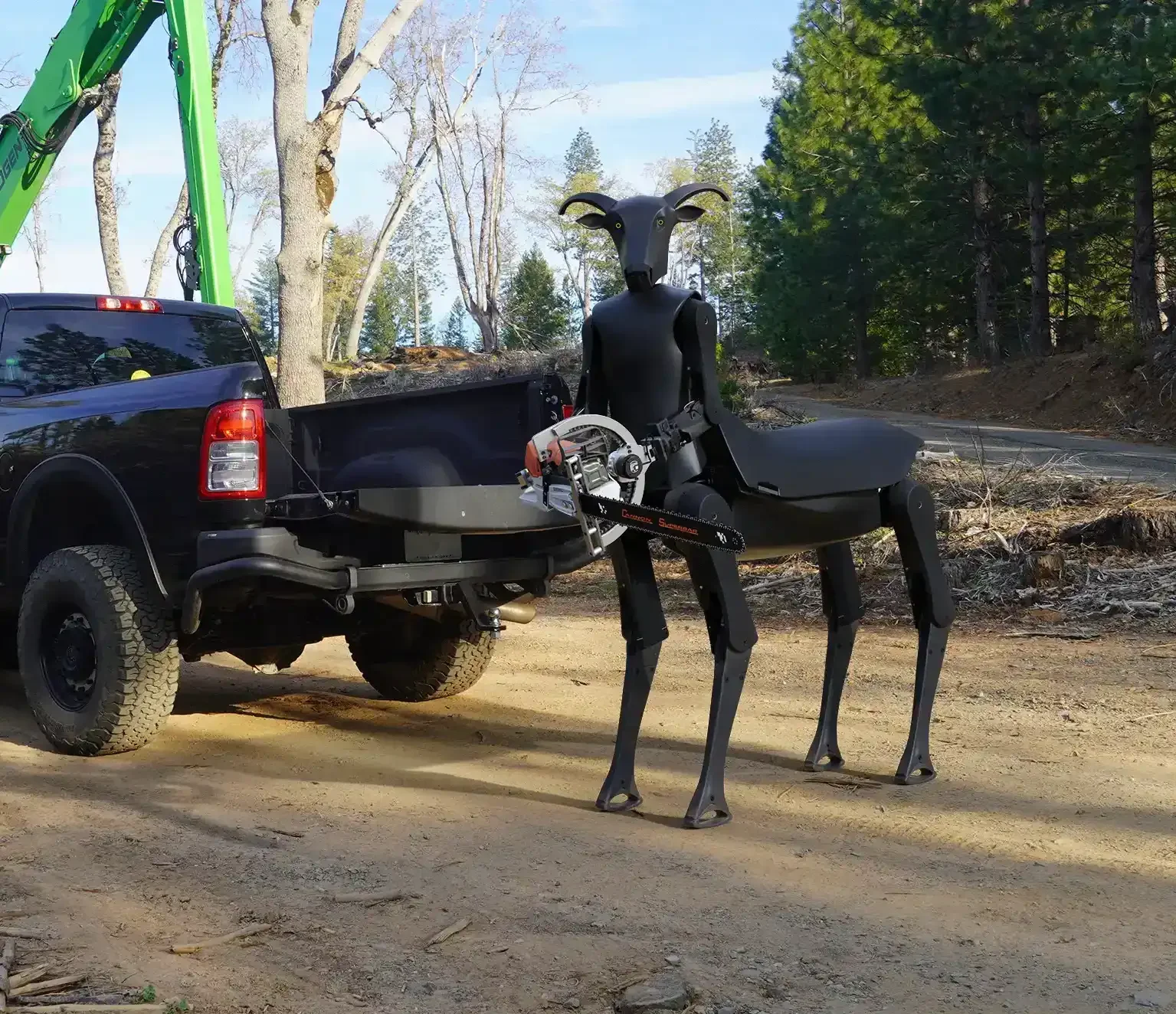
Publicity image published by Satyress to represent the intended forest use. It should not be interpreted as proof of an autonomous operation or an actual mission. Credit: Satyress Robotics/disclosure.
It is in this interval that Threehalves tries to find space. The idea of letting the metal receive the danger while the decision remains human is reasonable. What remains is to demonstrate that this implementation can deliver on the promise.
Chainsaw on the arm: visual exaggeration or practical choice?
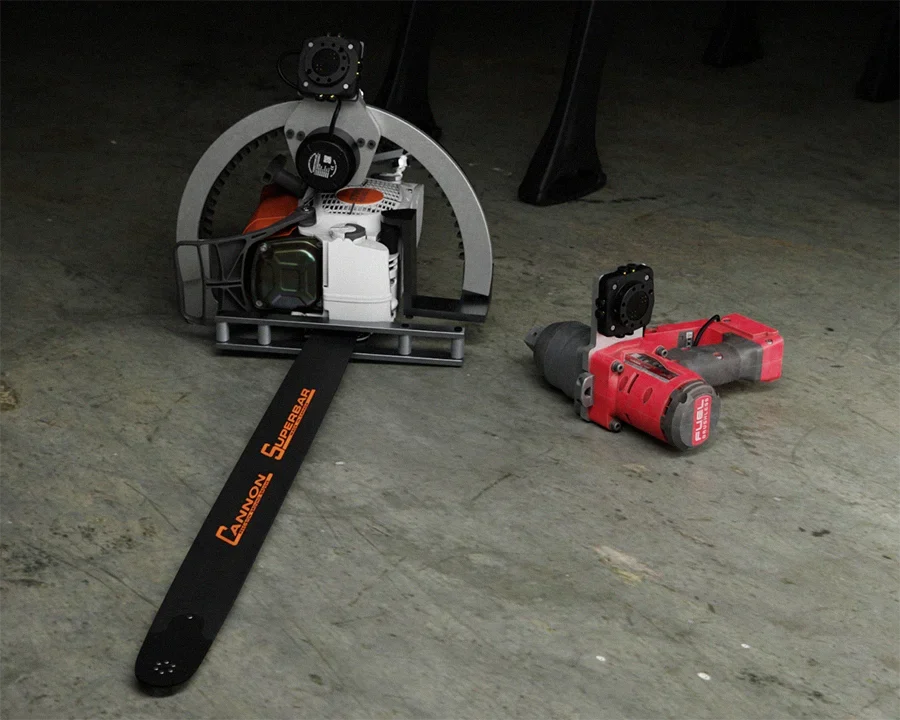
A human hand is extraordinarily versatile. A robotic hand with strength, precision, dirt resistance, and the ability to use heavy tools is still expensive and complex. Satyress decided to eliminate this problem and attach the accessories directly to the wrists.
Quick fit can increase rigidity and repeatability. It also avoids wasting energy imitating fingers when the task only requires keeping a saw or drill in position. On the other hand, every tool needs power, control, protection, and a safe change procedure.
Tools with adapters shown on the official Satyress website. Credit: Satyress Robotics/disclosure.
A promotional photograph shows a gasoline-powered chainsaw. The Debrief noted a practical question that has yet to be publicly answered: without hands, how would the robot drive the starter rope? An electric version or an adapted mechanism would solve the problem, but this example reveals how renders can skip over details that dominate real engineering work.
Horns have a function, according to the company
The horns are responsible for much of the unsettling appearance. Beau G. said they can be fitted with cameras that focus on the limbs and tools, giving the operator a redundant view in case the joint sensors have problems.
They would also be part of a physical containment strategy. The robot would be too large to normally walk through a standard residential door or turn into a narrow hallway. Larger horns could completely impede passage through pedestrian driveways.
It's a curious solution: instead of hiding the danger under a friendly carcass, the design signals that the machine is not a toy, a home security or a social companion. It should operate in isolated and controlled areas.
How to stop a robot with four legs and a chainsaw
The Satyress website devotes unusual attention to ways to immobilize the machine. The normal option would be an emergency button in the front region of the torso. The project also provides for brakes and pins that lock the joints when there is a loss of power or pneumatic pressure.
As a last resort, air reservoirs in the chest and back could be punctured to cause pressure loss and activate the locks. The company even illustrated the use of sharp objects and firearms, which made communication even more frightening.
Thinking about failures outside of software is a valid practice. A digital button doesn't help if the computer has stopped responding. Industrial systems use principles such as emergency stop, safe state in the event of power outages, and physical isolation of the area. The controversial aspect is to make the extreme procedure such a visible part of the public presentation before demonstrating the machine working.
Important answers are also missing: what happens if a latch fails, how does the tool lose power, what is the safe distance, how does the operator confirm that the system has stopped, and what barriers prevent a person from entering the work area? These questions require risk analysis, repeatable testing, and independent validation.
What Needs to Happen Before You Call This a Rescue Robot
A convincing demonstration would have to go far beyond a ride on flat ground. Threehalves would need to prove, among other points:
stable locomotion in ashes, mud, stones, branches and slopes;
control of a tool under load without losing balance;
safe stop after power, air or communication failure;
reliable video transmission in smoke, dust, and low lighting;
energy and thermal autonomy compatible with a real mission;
resistance of cables, hoses, cameras and actuators to heat and impact;
quick module change with field-available parts and tools;
interface that does not overload the operator;
training, maintenance and cost feasible for emergency teams;
performance measured in standardized scenarios and comparable to other platforms.
NIST's robot response program exists precisely because buyers and first responders need to know what a machine can actually do. A spectacular image doesn't measure mobility, reliability, or safety.
So, savior or beginning of the apocalypse?
For now, neither.
The Threehalves is not an autonomous exterminator patrolling forests. Nor is it a savior ready to replace workers in fires. It is an incomplete prototype built by a very small team, accompanied by interesting engineering choices and a visual presentation calculated not to be forgotten.
The centaur shape has serious precedents. Teleoperation can preserve human knowledge and keep people away from risk. Tools attached directly to the arms can be more practical than robotic hands. Passive brakes and physical locks deserve attention.
At the same time, almost all of the most important capabilities remain in the realm of promise. There is no public demonstration of the set going and working, no independent results, price, or release date. Until that changes, it's best to treat the Threehalves as an experimental proposition, not a product.
If one day it appears among the smoke with a chainsaw, the recommendation will remain simple: don't run into the flames. Look for the human team that is holding the joystick.